Anatomy of an Oyster, Rita Puig-Serra Costa
25/11/2026 - 09/01/2027
Text exhibition by Anna Manubens
It has always made me uncomfortable that when we talk about Anatomy of an Oyster it is said that the pearl is a metaphor. The way the oyster survives the wound of a strange body wrapping it up to make a pearl would be a metaphor for how Rita Puig-Serra revives, processes and somehow finds a closure for the abuses suffered during childhood by making a book. I did not want to say that, and I have already said it.
I had proposed not to mention explicitly what happened. I did not want to explain the images starting with experience; turning them into their consequence. But the problem with metaphor is precisely that it imposes an order and makes images seem secondary.
It is true that there is a desired effect of symmetry between the two processes, that of the oyster and that of the Rita, but the metaphor goes further, making the relationship between the facts and the images unequivocal and linear. As if the original wound existed in full light; as if it were accessible and enunciated by the one who lives it and then, in a deliberate and perhaps even ornamental creative gesture, the facts are translated into images.
The case of Anatomy, on the other hand, works in reverse. The case of Anatomy, on the other hand, works in reverse. The images specify and make sensitive something that, without them and before them, was not allowed to be said or contained. Like a memory of the body, a hole in the skin or some spasmas of memory that without the images did not succeed in existing. The images illuminate the event. Not as a documentary test that verifies, but as the fire of a spell. Filled with whites such as memory, the pages gradually lift an atmosphere by aggregate fragments: one night; a friend; a perforated wall; the suffocation of the plastic and that wrinkled hand.
I mean, to paraphrase Roland Barthes, that there are things that slip around and seek us, sometimes for a lifetime, without finding a way to express themselves, until, more or less fortuitously, a word or a fair image appears, which allows us to start explaining. And in this same gesture, what existed before the book only in confidence, goes from being private to being common; from being autobiographical to being political. Anatomy opens the conversation without reopening the wound. It protects from going back up the river of trust while preserving its brutal honesty. The oyster is then a portal, a medium or a cling but not an aesthetic motif.
In addition, it is as if the metaphor dried the animal when it makes it appear as an illustration. Anatomy's images are too full of water to work like this. This is perhaps a hydrofeminist book and if it were, between Rita and Oystra the link would not be literary would be literal and material; a link of learning. In her book Undrowned: Black Feminist Lessons from Marine Mammals, Alexis Pauline Gumbs explains that there are “a series of fundamental practices of black feminism, such as breathing, remembering or collaborating... that they can be informed and transformed into learning from marine mammals.”.
All this to explain that, when writing about Anatomy, I wanted to do it along the path of images. That is, insisting on images as a starting point and not as a destination. Also insisting that the photographs of Rita live together, always in plural, completing each other. And I wanted to intersperse between the images of Rita those of others who, like her, found the way and the companies to host and expel violence.
I think I’d rather keep the bullet. /It is mine, see, I am not giving it up. This way you still ow me and that’s as good as anything. You can’t get out of this one, you can’t get it out of me, and with this bullet lodged in my chest, covered with your name, I will turn myself into a gun.
–Richard Sicken
On the same page there are two small, almost equal photos of a beach. The person taking the photographs is in the sand. At first sight, hardly anything is seen, but there are two bodies together in the water.
A very fine plastic covers everything. It is so thin that it is wrinkled and the wind moves it. This plastic that covers everything looks like water and seems forensic. It is a plastic that would stick you to your mouth when you catch air.
I started Early - Took my Dog -
And visited the Sea -
The Mermaids in the Basement
Came out to look at me -
And Frigates - in the Upper Floor
Extended Hempen Hands -
Presuming Me to be a Mouse -
Aground - opon the Sands -
But no Man moved Me - till the Tide
Went past my simple Shoe -
And past my Apron - and my Belt
And past my Boddice - too -
And made as He would eat me up -
As wholly as a Dew
Opon a Dandelion's Sleeve -
And then - I started - too -
And He - He followed - close behind -
I felt His Silver Heel
Opon my Ancle - Then My Shoes
Would overflow with Pearl -
Until We met the Solid Town -
No One He seemed to know -
And bowing - with a Mighty look -
At me - The Sea withdrew –
-- Emily Dickinson
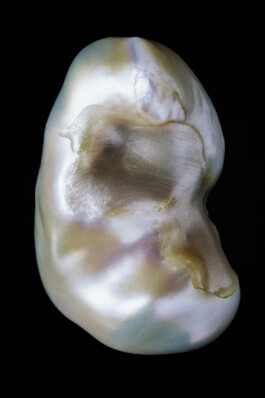
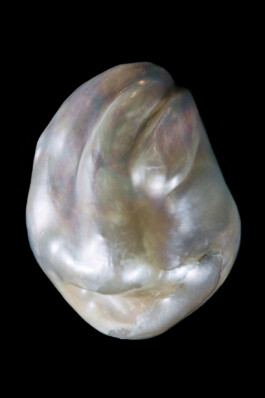
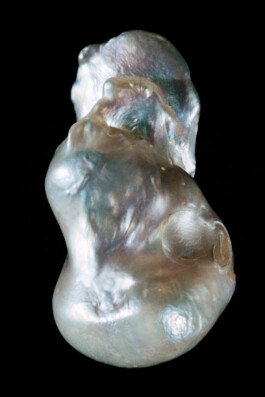
I don't know if it's an eye, a drop, a backlight or a pearl.
The open oyster is an entire geography. In the center, like an eye, a drop or a clitoris, the pearl.
Oh no, wait, it's an eye.
The mouth, oyster and vulva have lips.
With the help of metal instruments, hands force the oyster, open a gap and deposit a strange body.
Your hair as a child. His arm and the limit of photography, cut without scissors.
You, little girl, looking at the camera. You have your hands on the neck of someone we don't see because he's got his whole body covered by a sleeping bag.
“I hadn’t so much forgot as I couldn’t bring myself to remember.
(…) The truth was like a wadded-up handkerchief, sopping wet in my fists, and the sooner they accepted it the quicker I could let my hands open and the air would cool my palms.
(…) The dress I wore was lavender taffeta, and each time I breathed it rustled, and now that I was sucking air to breathe out shame it sounded like crepe paper on the back of hearses.”
- Maya Angelou, I know why the Caged Bird Sings
In the middle of a disorganized room, a right body. It covers it, steamy, a very fine plastic. So fine that it wrinkles and swells. Makes it look like a ghost. Only a shoe can be seen from the guy. On top of a closet, a loose leg of mannequin. I'm afraid to think there are too many things to pay attention to in this photograph. Maybe I'll miss the important one.
Oh no, wait, it is that these hands with metal instruments extract the pearl. He's out now.
The foam that marks the route of the ship. That's where we've been.
Anna Manubens
[1] Roland Barthes, Comment vivre ensemble : Simulations romanesques de quelques espaces quotidiens, ed. Claude Coste (París: Seuil / IMEC, 2002)
[1] Alexis Pauline Gumbs, Undrowned: Black Feminist Lessons from Marine Mammals (Chico, CA: AK Press, 2020)
Tuesday to Friday.
12-15 h (by appointment)
15:00–19:00h
Saturday. 11:00–14:00h
Tuesday to Friday. 15:00–19:00h
Saturday. 11:00–14:00h